
BRING ON THE YOUNG LEARNERS
Fair Park may be one of the most underutilized field-trip destinations for kids (and adults) in Dallas.
After all, field trippers can view historic art works, learn about Texas history from the Dallas Historical Society’s (DHS) expert staff, and visit the African American Museum and the Children’s Aquarium. So why aren’t there school buses filled with students waiting to tour the Hall of State or to put their hands on sting rays at the aquarium’s “touch pool”?
There is a woeful lack of awareness that there is life in Fair Park outside of the annual 28-day State Fair of Texas. Most people give little thought to the park the other 11 months of the year. Most don’t know about its architecture, art, cultural and historical riches.
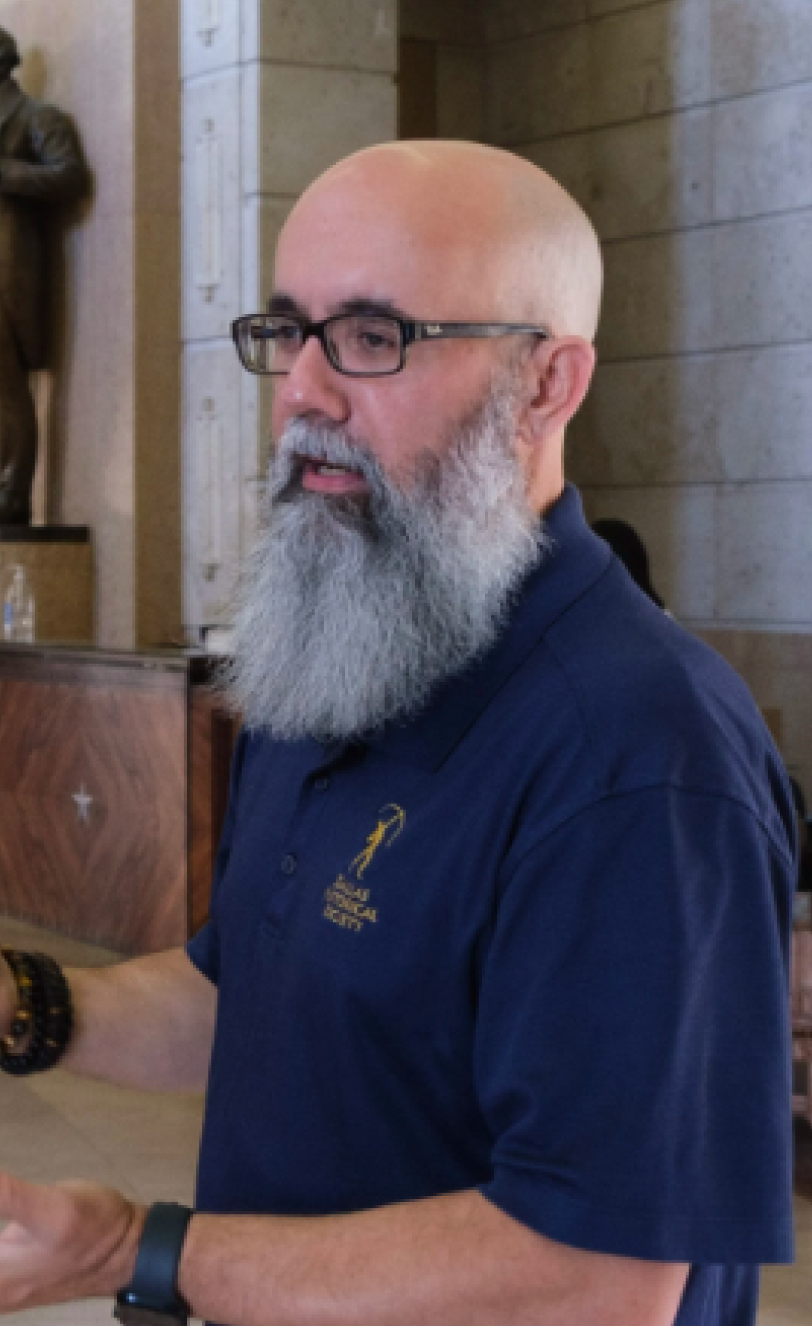
David Lee explaining the history behind a new Juneteenth exhibit at the Hall of State.
David Lee, the director of education for the Dallas Historical Society (DHS), is working to change that for area youth by opening the Hall of State doors to schools, summer camp programs, scouting troops, and other youth groups.
He and the DHS team are successfully reviving a Texas history field-trip program that had gone dormant until three years ago. In the latest academic school year 3,000 4th and 7th graders (grades where Texas history is taught in schools) toured the history-rich Hall of State. In this coming school year one of the area’s largest public-school districts is planning for student field trips, which will significantly increase those numbers.
Transportation costs have long been a barrier for organizing the field trips. Now, under a grant from the HEB Community Investment Program, schools and other youth groups can apply for scholarships to cover their transportation costs, as well as receive box lunches for the field trippers. “Many of the schools can’t afford to dedicate a bus and driver for field trips,” said Lee. “And some schools don’t even have a bus.”
He says the HEB scholarship program has been a game changer in getting the field-trip program (re) kick started. Schools that serve high concentrations of students and other youth groups from low-income homes are eligible for the scholarships.
Another challenge for history learners is how to understand events, facts and dates that are frozen in time. Eugene Savage’s 1936 murals in the Hall of State’s Grand Hall represent history as it was understood nearly 80 years ago.
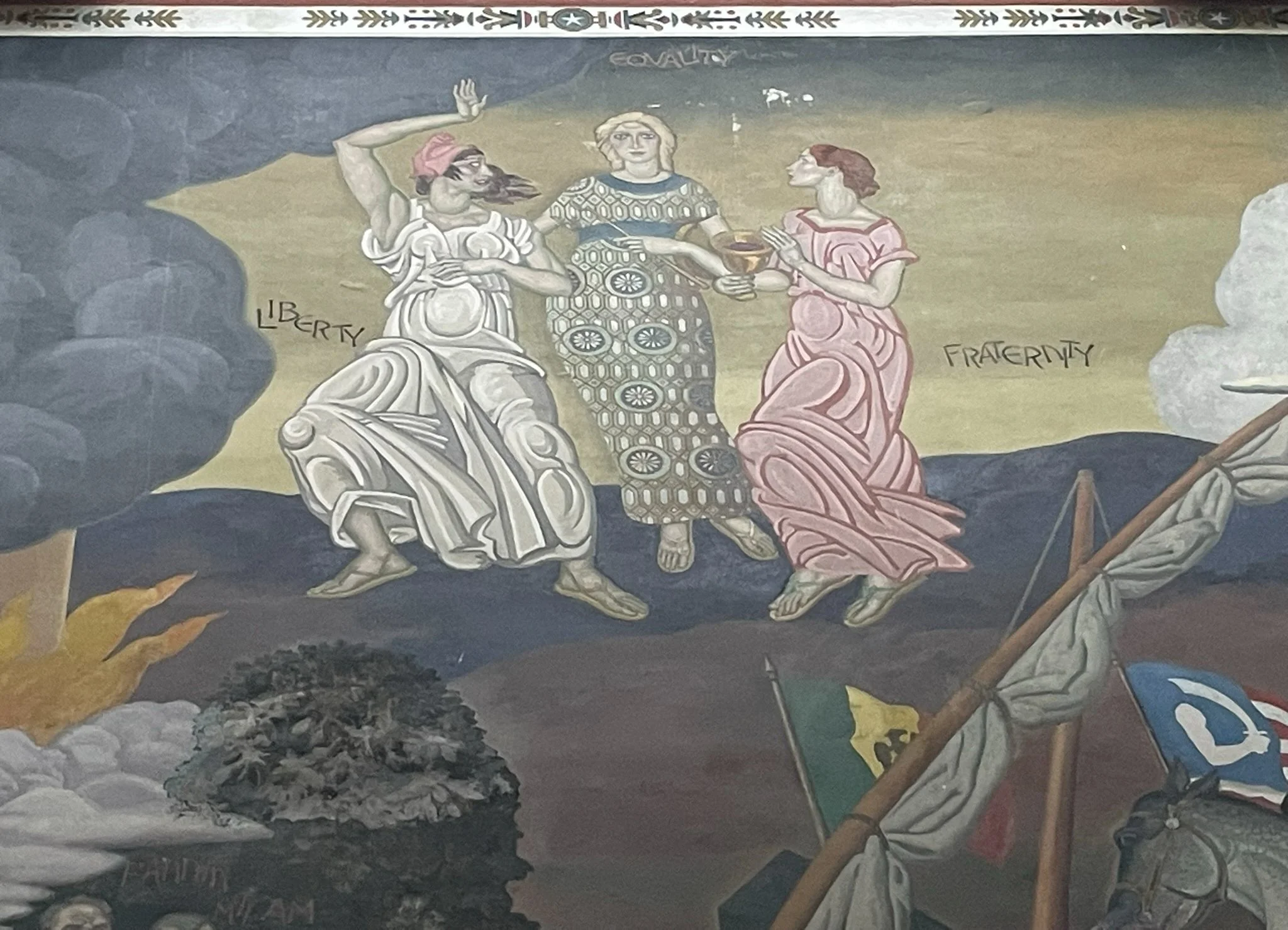
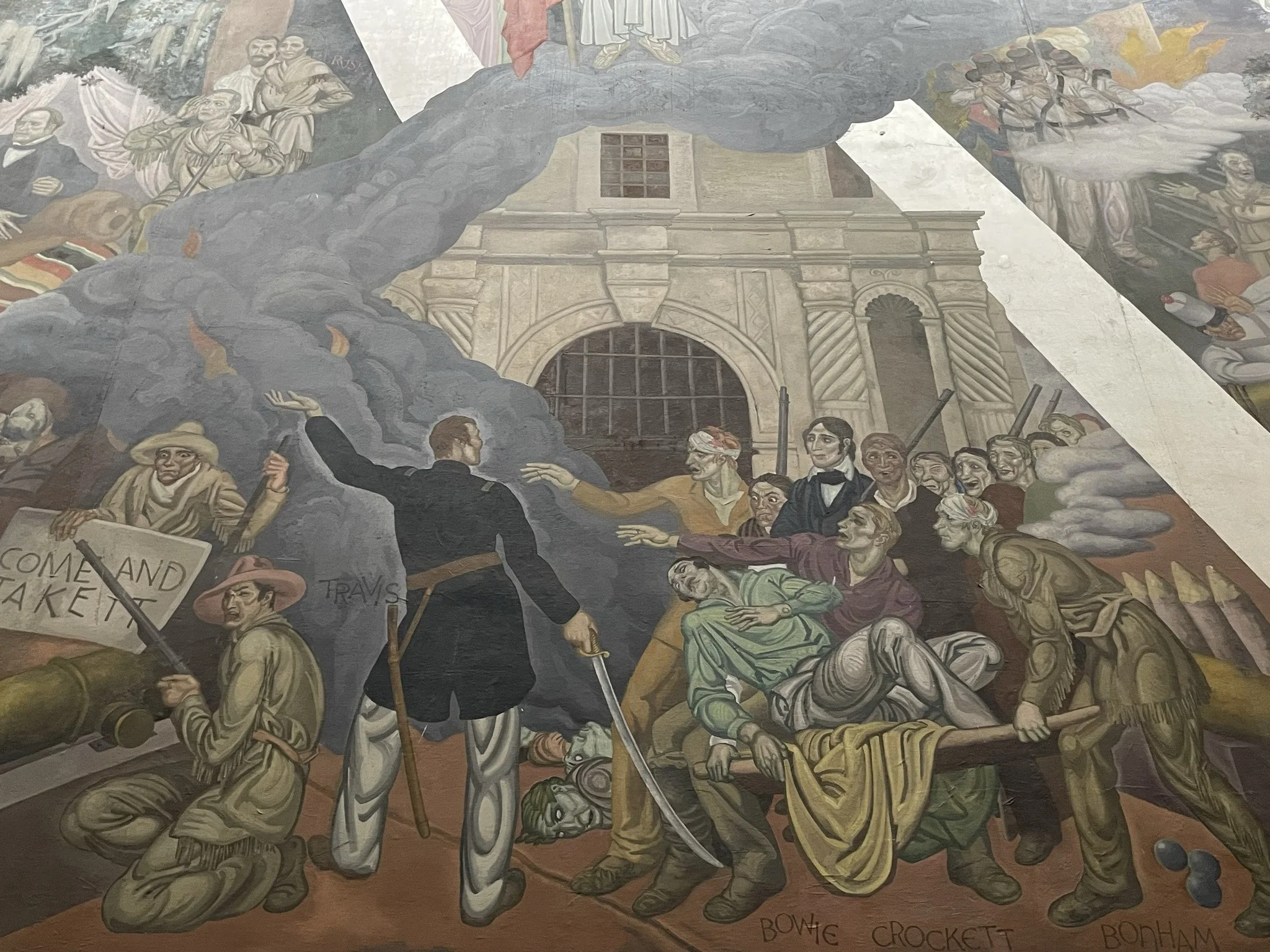
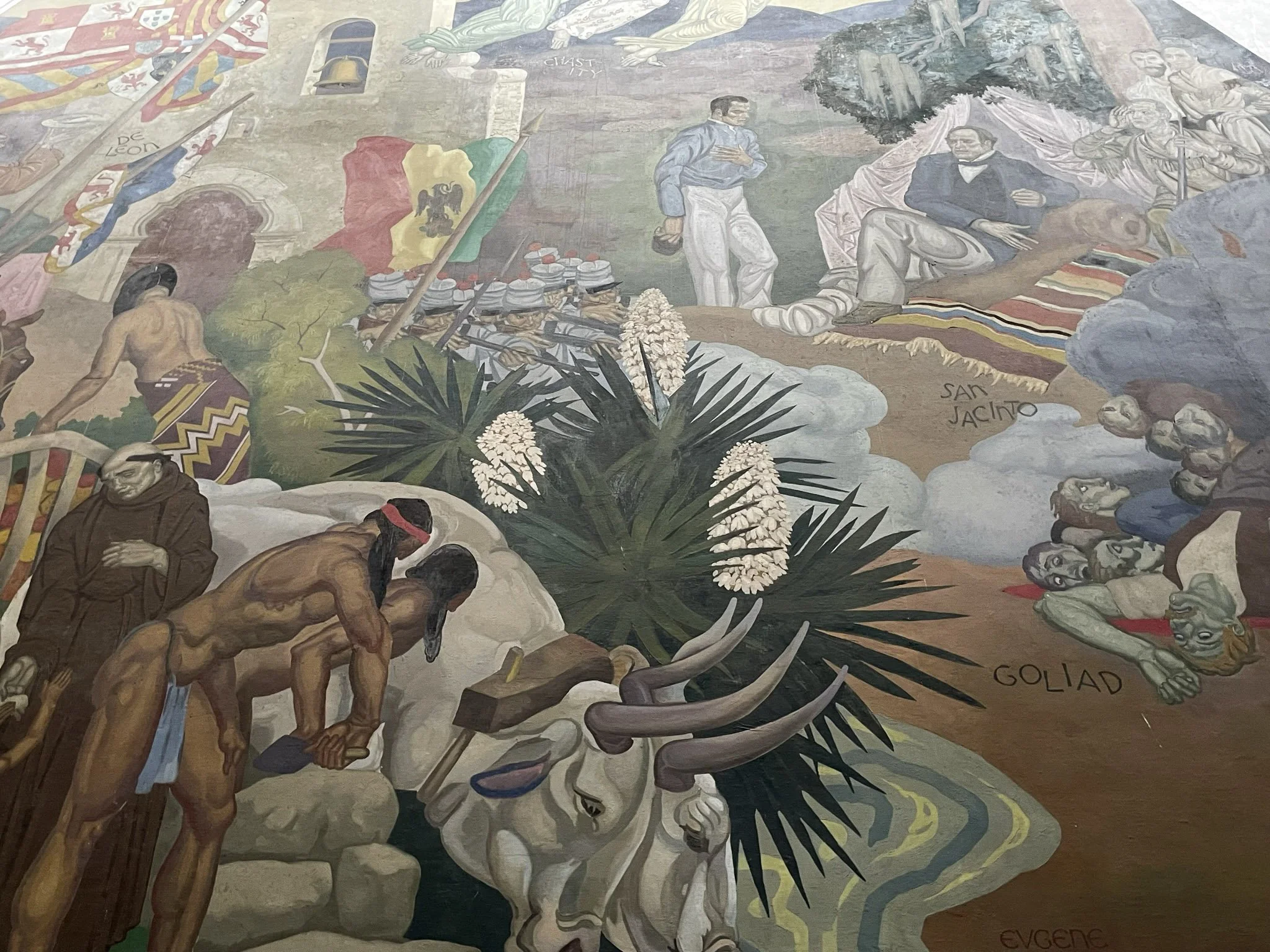
Students get a close-up lesson with the murals (above) depicting important events and concepts in Texas history. Here they can “read” the story through the painting and also ponder how interpretation of history can change over time.
Lee says that he wants to make sure that the lessons are relevant for current and future generations. Dates and historical facts don’t change, but how the stories are viewed over the decades do. Context matters and so does recognizing that history’s interpretations aren’t trapped in amber.