Dallas’ African American Museum (AAM), which was founded more than 50 years ago, has been an enduring part of Fair Park since 1988 when its former home, Bishop College, declared bankruptcy and the museum took up temporary residence in the Hall of Religion
Later, the museum’s small offices found additional temporary homes at Fair Park in the WRR radio station building and the Magnolia Lounge. The museum had no exhibition home and museum founder, Dr. Harry Robinson, Jr., got the collection and programming in front of the public at Fair Park’s Hall of State, the Dallas Public Library, El Centro College, the Trammell Crow Center and other venues.
According to Margie Reese, the AAM’s Chief Programs Officer, city leaders, the parks department, and local citizens recognized that the museum’s collection, at the least, needed a temporary home. With unoccupied buildings available at Fair Park, the site offered a practical solution. What no one knew at the time is that it would be a permanent institution in Fair Park.
Ironically, an important Dallas arts and cultural institution which resided in Fair Park for nearly 50 years, the Dallas Museum of Fine Arts, moved downtown just four years earlier.
In 1993, Fair Park became the AAM’s permanent home after a years-long capital campaign and construction of its museum, which stands near the site where the Hall of Negro Life stood during the Texas Centennial Exposition. It was then, and continues to be, the only permanent art and cultural institution in Fair Park.
Unlike other Fair Park institutions, such as the Dallas Historical Society, Broadway Dallas and the Children’s Aquarium, the AAM has a special relationship with the surrounding South Dallas community, which has for many years been the heart of Black Dallas and where local civil rights leaders lived and worked.
“South Dallas and Fair Park are accidental, inseparable thoughts,” said Reese. “Fair Park was built before South Dallas was a Black community, and so they became accidental Siamese twins.”
Being joined at the hip fosters a sharp examination of one another. “We looked at Fair Park as the Other and Fair Park looked at the neighboring Black community as the Other,” Reese added.
By the time the AAM became a permanent part of Fair Park, the relationship between the park and the surrounding community had improved somewhat. That limited thaw had been a long time coming, shaped by a painful history that included the City’s seizure of neighborhood land for Fair Park parking lots, and the State Fair of Texas’ limited access for Black residents.
Those scars may have faded but the legacies linger. Part of Fair Park’s restoration will be strengthening the connective tissue to surrounding neighborhoods, and a next step is taking place with the building of the Community Park on the east side of the Fair Park campus.
The AAM supplies some of that connection, but Reese believes it is and must continue to be an organic process. When asked about how the museum connects with the community, Reese made it clear that the museum must first follow its mission and be a museum.
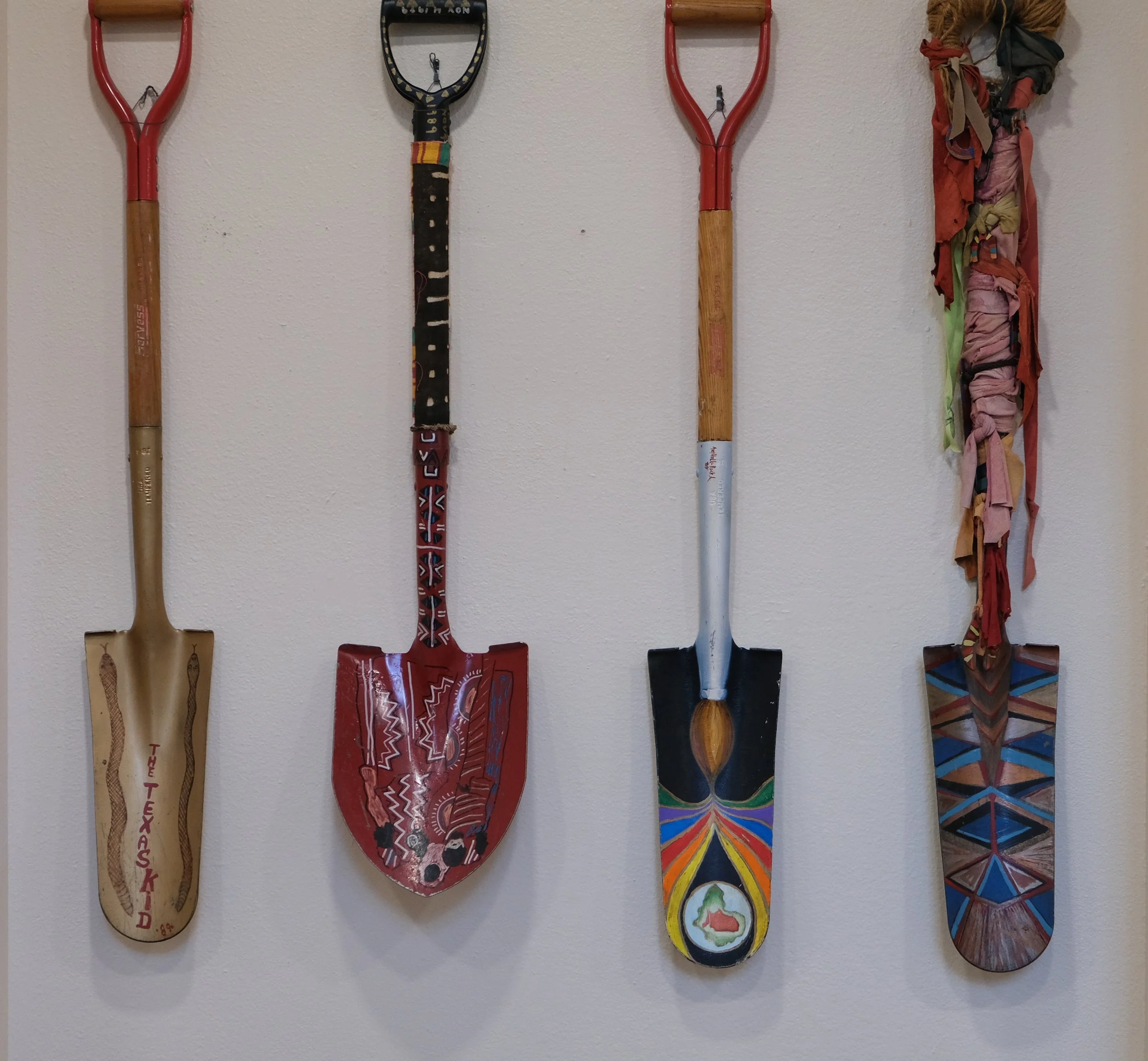
“A museum does three things. It collects, preserves and interprets,” she said.
Instead of bringing in a group of neighborhood children, for example, to a special program, the AAM would rather take programming to where the communities live, like to the churches and the YMCAs that run summer camps or after-school programs. “Let the [summer camps] do what they do and let us enrich what they do with the resources we have,” she explained.
This type of organic growth between the South Dallas community and the AAM is where Reese sees the greatest benefit.
What does that have to do with the connection between South Dallas neighborhoods and Fair Park? On the surface, very little. But that 50-plus year institution which has grown to be an important and enduring repository of the African American experience in Dallas, is enhancing the neighborhood schools, churches, civic organizations and arts and cultural sites that are just outside of the Fair Park grounds.
That enhancement naturally brings people into the museum for programs and exhibitions large and small. The current Mandela: The Official Exhibition, which was shown at Seattle’s Museum of History and Industry before its final stop in Dallas ahead of returning home, is a prime example. The AAM is the only African American museum in North America to house the exhibit, and thousands of DISD school kids from all over the city will experience it from August through October 2026. So, yes, the institution touches the surrounding Fair Park neighborhoods but also the city at large.
Once people encounter the museum’s resources in the wider community, they may be drawn to the physical museum itself. That connection broadens Fair Park’s identity beyond the State Fair or one-time events, reinforcing it as an everyday place to learn, gather, and play.
As for the AAM, “We got here. We’re in Fair Park. We’ve got this great building, and we just spent a lot of money in partnership with the city and the state to refresh it,” Reese said. “Dr. Robinson has set the bar, he’s retired, he’s done what he needs to do. And now, as an institution we need to be both things – a museum that collects, preserves and interprets and one that is also a community enhancement tool.”
The City Back in Charge
The AAM and other institutions who make up the Fair Park campus experienced the park’s public/private management from January 2019 through September 2025. When asked how she felt when the city took over management again, Reese exclaimed, “It was a joyous day! The grass was cut; weeds were pulled.”
The museum experienced non-working elevators for months under the prior operations management. “I walked around the staircase one day and saw two of our staff carrying a veteran down the stairs in his wheelchair,” she said. “How does that happen?”
She went on to say enduring the poor management came with a big cost. “What we lost was our enthusiasm and pride for this place.”
Restoring pride in Fair Park is now the job of all Fair Park stakeholders – the city, park department, contractors, tenants, the public, Fair Park institutions of long standing and newcomers.
The enduring African American Museum is leading the way.
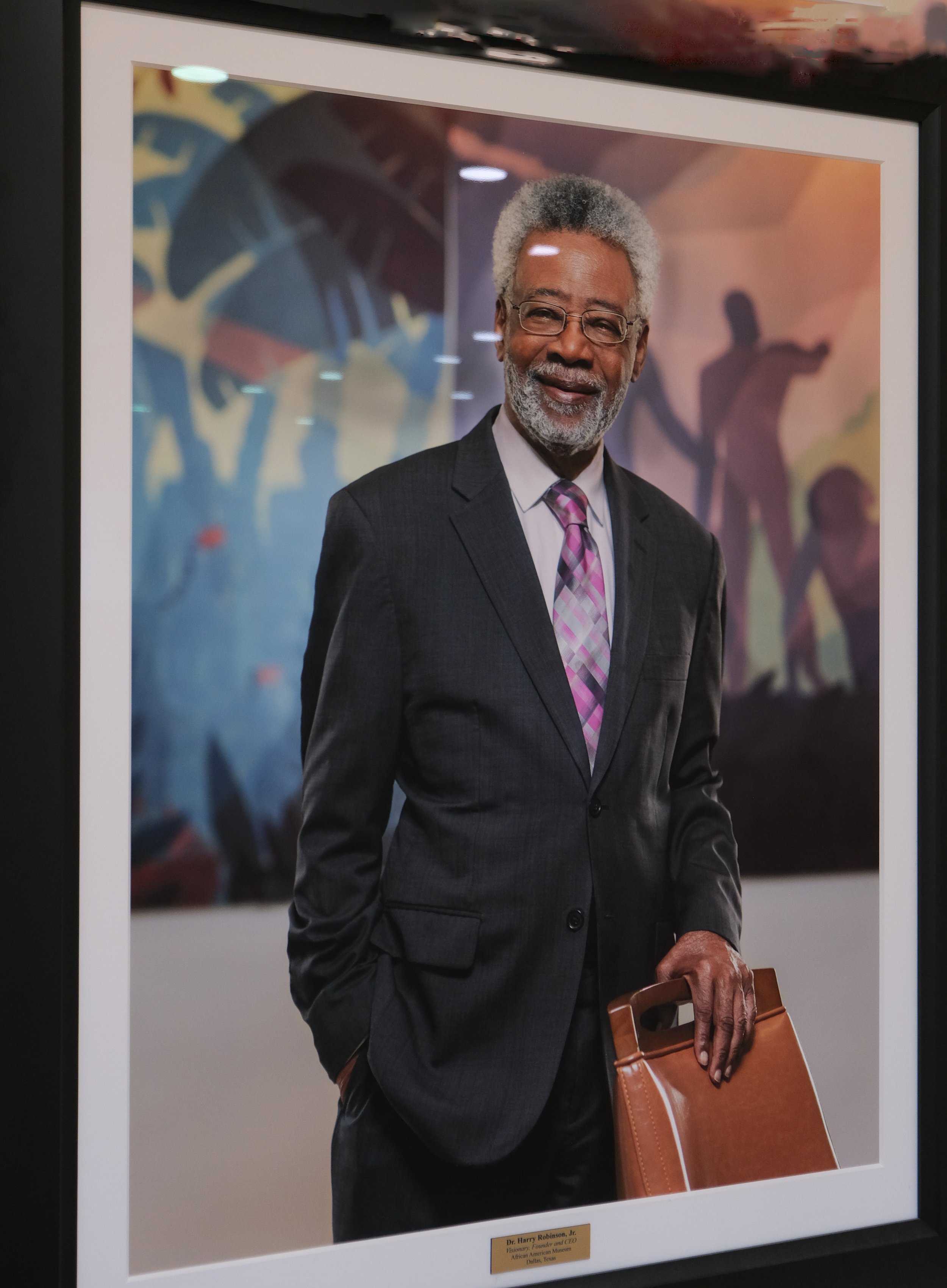
Portrait of museum founder Dr. Harry Robinson, Jr.
Sources: Texas State Historical Association (TSHA) History of African American Museum Dallas by Dr. Marvin Dulaney. Published May 4, 2013; updated January 13, 2025.