Big Tex Urban Farms: Building Bridges with Fair Park Neighbors
Between Big Tex and fair food, it’s hard to say which symbolizes the State Fair of Texas more. The big guy personifies the braggadocious Texan ethos, but it’s the messy, tasty and indulgent food – primarily fried – that is the real State Fair crowd magnet. Sorry, Tex.
You might be surprised to know that food is an integral part of the State Fair of Texas (SFT) organization 365 days a year thanks to a pair of SFT employees who started the Big Tex Urban Farms and are marking the project’s 10-year anniversary this year.
The harvested produce is a dizzying 180 degree swing from the State Fair’s food brand. Not a fried Oreo, funnel cake or a fried Frito pie in sight. The harvest is mainly leafy greens (lettuce, collard greens), cucumbers, tomatoes and other fruits and vegetables. It’s grown hydroponically in a greenhouse tucked away in a corner of the midway.
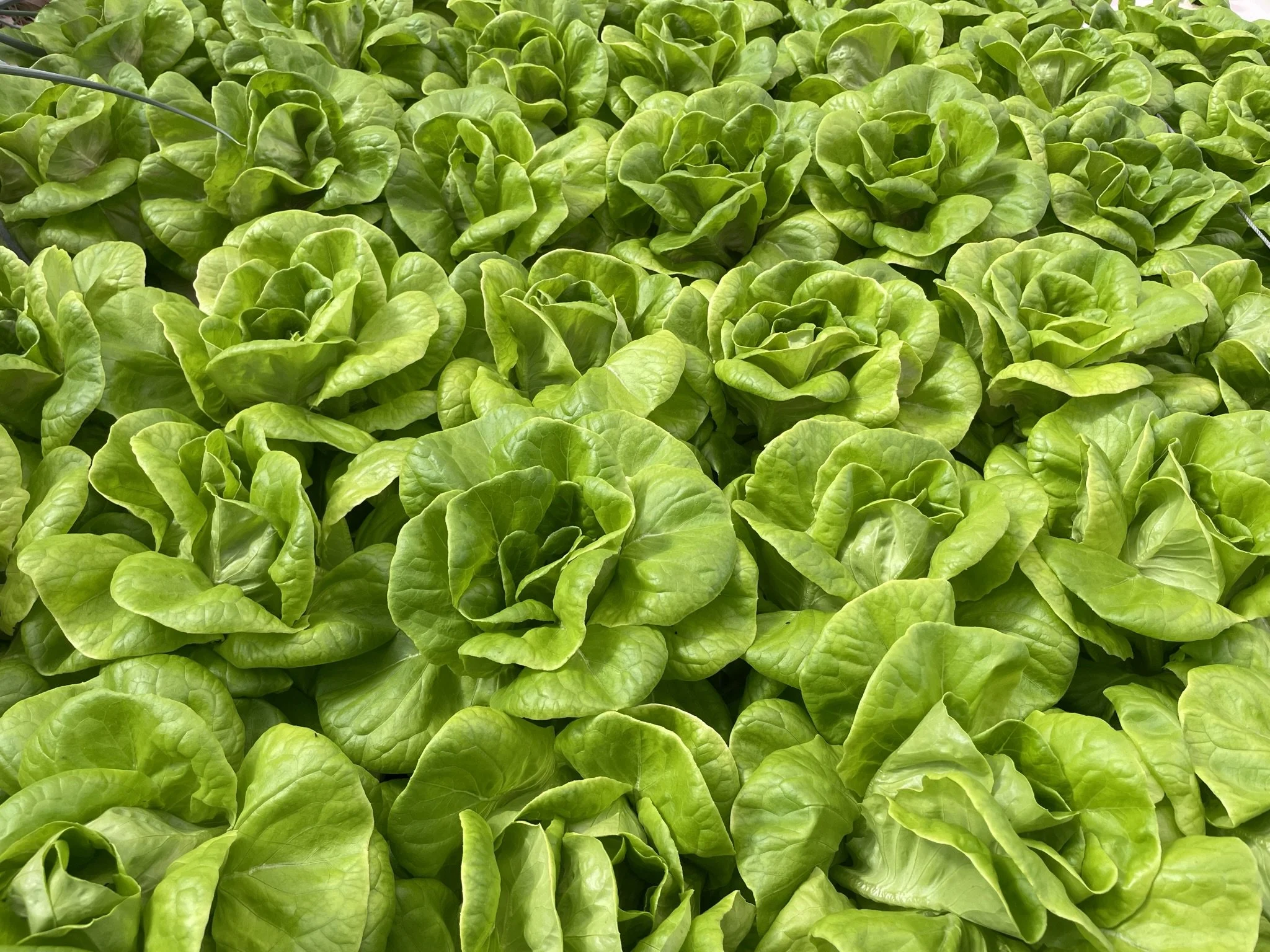
It serves as a bridge between the State Fair and Fair Park, and South Dallas, where many neighborhoods are classified as food deserts. All produce is donated to South Dallas neighborhoods through a network of community partners like the Juanita Craft Recreation Center, TR Hoover Community Development Corporation, 4DWM and the Jubilee Park Food Pantry. It’s not only the hydroponic growing system that makes the enterprise sustainable. The Farms can efficiently feed that produce into the community-based distribution system they’ve built – it gets the produce inside neighborhoods on a regular schedule where many residents have limited transportation options.
The story of how the Farm became to be is as organic as the produce. Jason Hays, now State Fair of Texas’ Senior Vice President Brand Experience, was living downtown in 2014 and secured a couple of garden plots at the Deep Ellum Urban Gardens (DUG), a community-driven garden started by the Deep Ellum Community Association. The DUG’s aim is to “foster community through growing fresh produce and to promote healthy living.”
The seeds were planted from that Deep Ellum Garden experience, says Hays. He was joined by another State Fair employee, Drew Demler, who is now Director of Horticulture. They started with garden containers in an empty space next to the State Fair Administration Building and a goal to make fresh produce available to South Dallas neighborhoods. South Dallas is among the areas with the highest food insecurity in the city, according to the North Texas Food Bank Hunger Index, USDA food-access mapping and other academic studies. That means there are few full-service grocery stores, high poverty rates and is an historically under-invested area compared to other parts of the city.
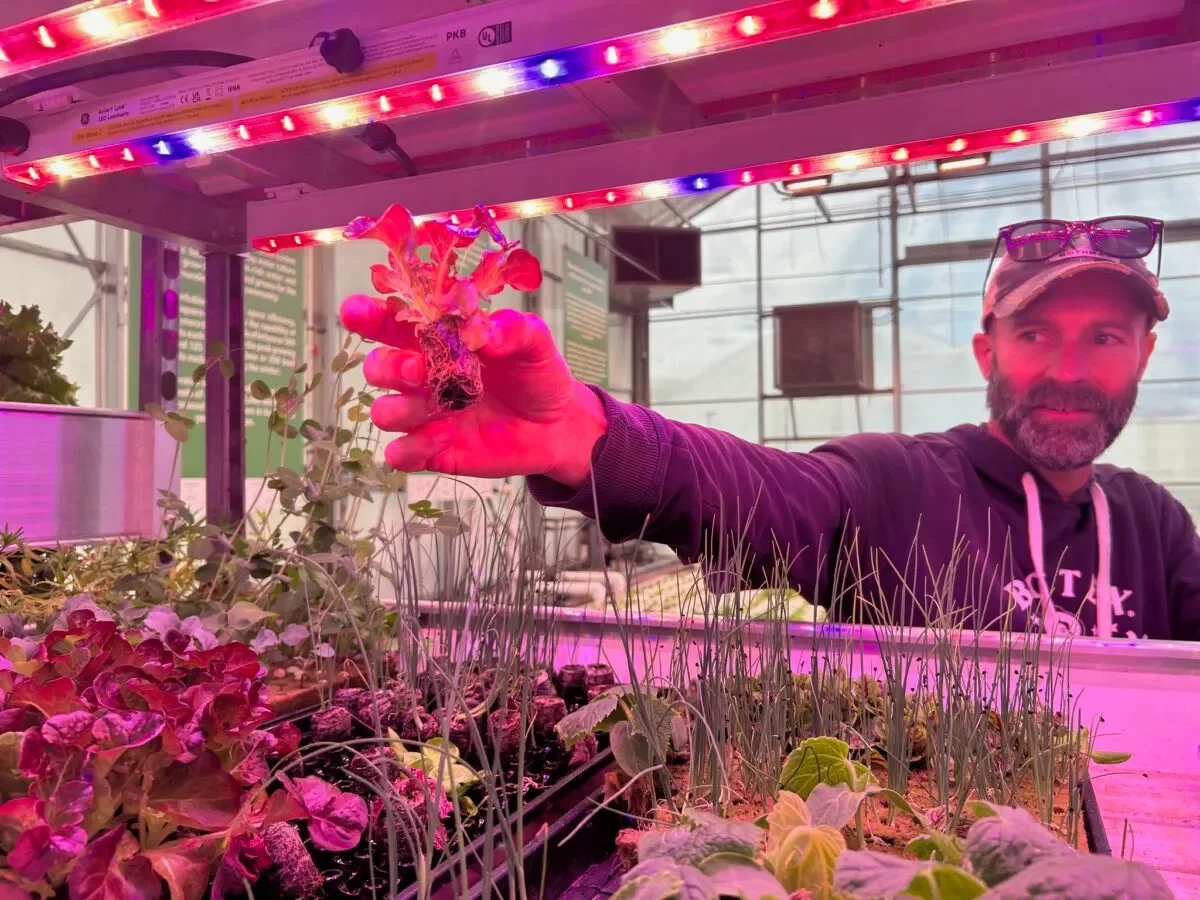
Source: Dallas Free Press
Drew Demler, Director of Horticulture, in the greenhouse
Hays and Demler started with 100 garden boxes and those grew to 500 boxes. From there the operation moved to a large greenhouse that had been used for cold storage and growing ornamental plants. That greenhouse now holds almost all of the hydroponic farming. A shipping container holds a “hydroponic propagation system” where seedlings are grown before being moved to the greenhouse. An auxiliary building holds the mushroom growing program, which began in 2024.
As an attraction at the fair, the Big Tex Urban Farms leans into the state fair’s agrarian education roots. You can tour the greenhouse during the fair’s 24-day run starting September 25. It’s on the midway between the carousel and the Ferris wheel and it’s worth the stop.
The Farms has a partnership with DISD's Diane Ragsdale CityLab High School where high-school students get hands-on urban agriculture experience through the school’s Practicum in Agriculture, Food, & Natural Resources.
According to the State Fair, the Farms has yielded about 2 million servings of fresh produce since 2016. “From the very inception of the program 100% of donations have gone to Fair Park neighborhoods,” Hays emphasized. “We’ve been approached by other organizations to provide produce to other parts of the city, but we only serve Fair Park neighborhoods.”
When asked about the innovation of the hydroponic operation, Hays pointed to the overall strides in urban farming. Not only do the farms occupy a smaller footprint than traditional farms, but the growing period is about 30 percent shorter than for traditional farming. Higher and faster yields make for more food donations into the community.
But there are limitations to the types of produce that can be grown hydroponically. The soil comes into play where the gardeners are incorporating pallet and container gardens outside of the greenhouse. This helps provide types of produce not suited to the hydroponic system. But the growing method is not as efficient as the side-by-side vertical columns of hydroponically grown cucumbers and tomatoes. The soil-grown produce has a longer grow time and doesn’t support year-round harvesting.
Hydroponic farming is more reliable than other types of gardens. Produce is grown year round and many community gardens that depend on volunteers and have little funding tend to have short life spans, said Hays. The SFT provides a more reliable foundation for consistent and reliable distribution.
The State Fair leases Fair Park’s midway zone from the city year round. Without it, the Big Tex Urban Farms wouldn’t exist.
The program is one example that illustrates how Fair Park institutions can do a better job of being a part of the community. The city and the State Fair haven’t historically been very good neighbors. With the community park due to break ground late this year, the African American Museum’s community involvement, and the Big Tex Urban Farms program, maybe a few of those iron bars in Fair Park’s perimeter fencing might come down some day.