
by Myra Moore
What Does the city’s Call for Concepts for Fair Park commercial development on 40 acres of parking lot tell us about Fair Park’s future?
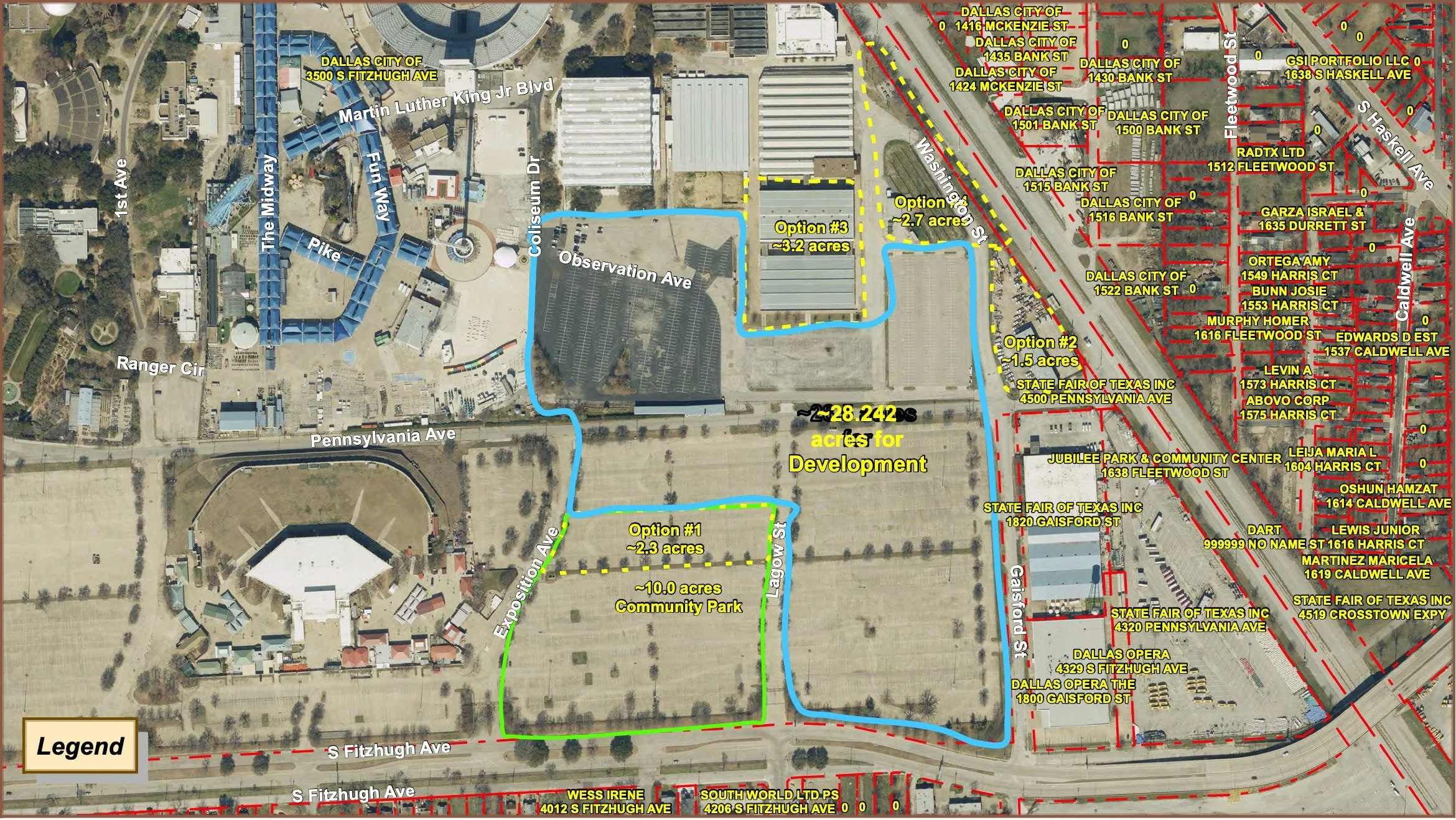
Commercial development areas proposed by Dallas Park and Recreation.
A good bit, although it’s mostly speculation. I asked the Park Department officials driving the proposed development “why now”? It’s a reasonable question. Status quo funding for Fair Park is clearly inadequate. For years Fair Park has relied on a quilt of various funding methods – general Park and Recreation funds, bond-package proceeds, city, state and federal grants, and private donations. What gives now?
After decades of failed attempts to sustainably fund one of Dallas’ most storied and historic public places, these city administrators say they are ready to step out of their comfort zones by proposing that which has not been previously attempted.
After all, city administrators work inside a political system that doesn’t usually reward risk taking. “In a lot of cases it’s easier to do nothing,” said Ryan O’Connor, senior deputy director of Dallas Park and Recreation. “That’s not what we are doing here.”
Also, the failure of the public/private management experiment that ended in Park Department’s firings of the non-profit and for-profit managers was particularly ugly. Was it the finger pointing, misappropriation of funds accusations, lawsuits, and further physical deterioration of the park that gave administrators the extra push to action?
“Unfortunately, for a long time, no one has finally said, ‘We’re going to give our all towards this’,” said John Jenkins, Park and Recreation director. “I feel like momentum is totally different this time.”
And why would the momentum be different this time?
Jenkins believes that breaking down the process into small, measurable pieces lets the public see progress. “Then the elected and appointed officials see that we’re laying out a plan everyone can understand – one with attainable pieces that take care of the fundamentals and basics first,” he said.
It’s personal for Jenkins. After 33 years at the Park Department, he says he’s not retiring until Fair Park is fixed. “Through all those years I’ve felt like it has been an underutilized asset.”
What is the proposal to fix Fair Park? Generate recurring revenue for Fair Park maintenance and operation by allowing certain types of establishments to build and operate businesses on an underutilized part of Fair Park next to the future Community Park. Land leasing deals, revenue sharing agreements or other fees would provide that revenue.
It has been done before, but not here. In New York City, for example, the Brooklyn Bridge Park has a similar funding structure – revenue from commercial development only in a special zone of the park. This is an important feature as the proposed 40-acre Fair Park eastside location is outside the historic-landmark protection zone. The commercial-development zone would exist to generate revenue for the rest of the park – namely the historic Art Deco treasures that are in dire need of maintenance, repair and restoration.
How the private development on public park land works, what can be built on that land, and what types of development the city wants (sports and entertainment venues, restaurants, retail, hotels and parking garage(s)) is in the “open call for concepts.”
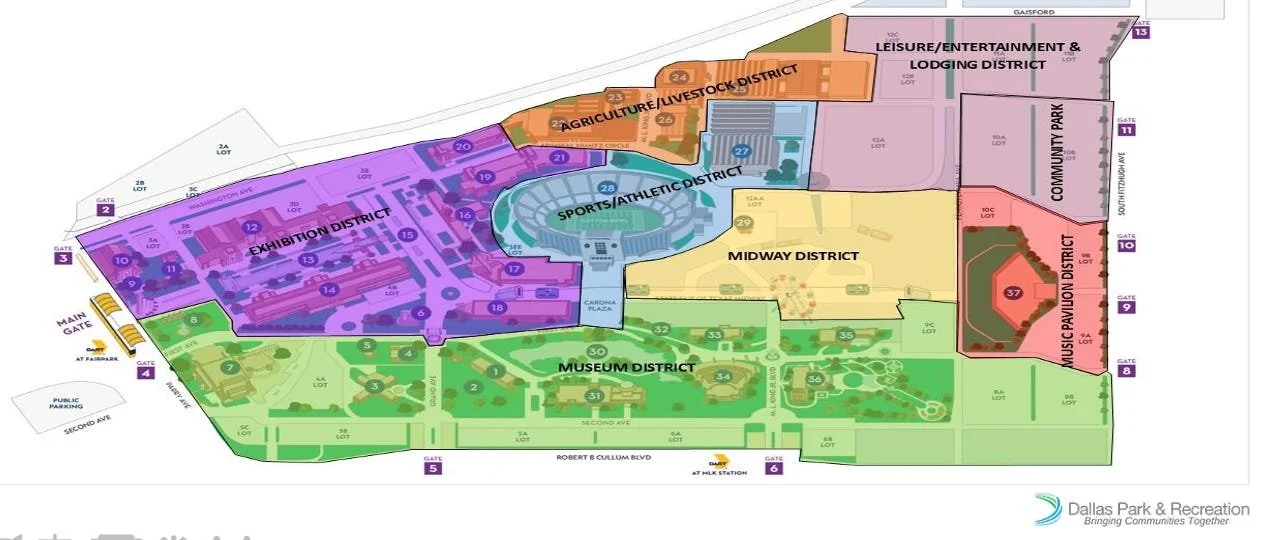
Rendering shows how the proposed Leisure/Entertainment and Lodging district in the upper right will fit with the rest of Fair Park.
As the name implies, the call is for ideas, not detailed proposals. Asking for ideas instead of a proposal suggests what that the Park Department first wants to measure interest and signal to those answering the call what type of applicants it desires – “real estate developers, investors and development partners.”
The Park Department officials believe the plan can help with other intractable problems holding back Fair Park from realizing its full potential. Two are critical: Drawing in daily visitors, not just those on campus for big spectacles; and partnering with the South Dallas community to promote jobs, career training and small-business opportunities by requiring potential developers/businesses to provide substantive hiring and training programs that benefit the neighborhood.
Jenkins pointed to the history of the proposed site and emphatically tied it to the importance of potential development benefitting South Dallas. “Houses taken away, a loss of generational wealth,” he lamented. “To bring in this great opportunity and not structure it so that the community benefits; I don’t want to be part of it if we can’t do that.”
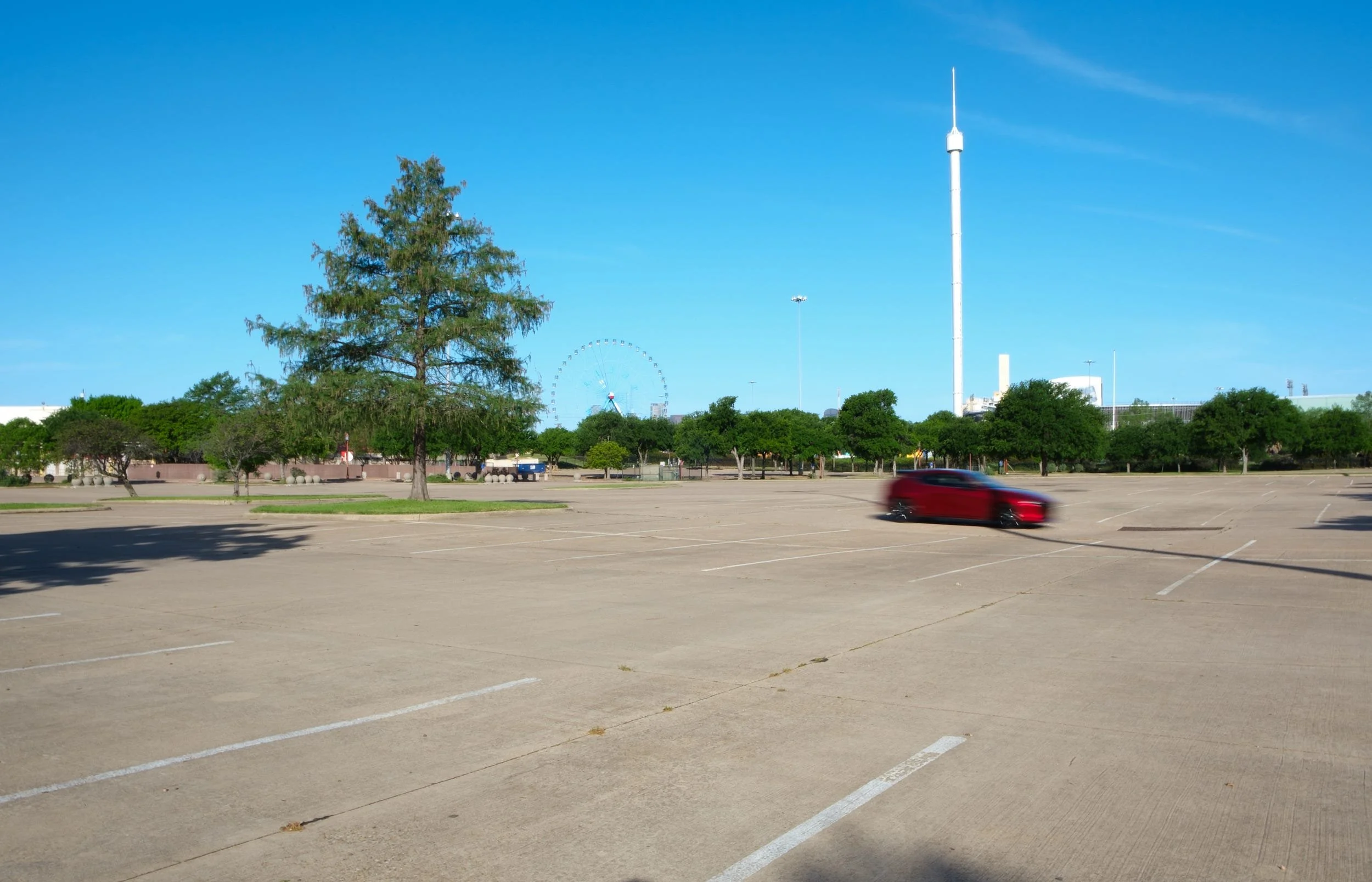
Sustainable funding. Daily Park activation. Serious opportunities for South Dallas residents and businesses. It’s a tall order for one real-estate project.
It’s also a concept worth exploring. Just explore it with advisors who understand commercial development in a city park and what it takes for such development to be financially feasible. But also explore it with people who have a stake in the surrounding community’s health.
The Park Department has made announcements of its intent, conducted community meetings seeking input from surrounding neighborhoods and made the call for concepts public. This doesn’t guarantee ongoing and meaningful transparency but it’s a good start.
If the city has learned anything from the process of hiring and firing private managers at Fair Park and the attempt to vacate Dallas City Hall, it should have, at least, learned to conduct its business in the light of day.
We’ll be watching. We want to make sure that city officials are treating our Fair Park with the respect she deserves.
The Basics
Source: City of Dallas
Call for proposals opened in early November. The deadline is January 22, 2027.
The development site is on the northeast side of the park, which includes parking lots 10, 11 and 12 (about 40 acres).
Types of development desired:
Sports venue or facility
multipurpose entertainment
restaurants
retail
lodging
structured parking
Submission Guidelines
Source: City of Dallas
Team and capability. Identify the lead entity, business contact, proposed roles, relevant completed projects and experience with public land, complex operations and capital formation. Identify partners still to be secured.
A written narrative outlining the concept, proposed uses/facilities, and overall development approach.
Conceptual renderings (if available), diagrams, and/or site plan illustrating the concept/plan/development on the property within Fair Park.
A high-level development program identifying potential uses as identified above that describe the potential development theme/s, activities, and potential attendance targets annually.
A summary of anticipated economic and community benefits that should include local small business opportunities, workforce development program, and local hiring targets/goals.
A preliminary development budget and timeline, funding strategy, phasing schedule/strategies, and estimated financial benefits to Fair Park in the form of lease payment or other compensation.
The respondents position in attaining the development of the concept (e.g. willingness to enter into an agreement with the city)
Submissions are intended to remain conceptual in nature at this stage, and respondents are not expected to provide detailed engineering documents or financial models. The city will not reimburse costs associated with preparing concepts, renderings, or supporting materials.
This piece was first published in the Restore Fair Park Dallas Substack. Subscribe there to get new essays by email.